
Performing a self-exam aids in the early detection of various medical conditions, helping you to prevent a potentially severe diagnosis. As February is National Self-Check Month, we are going to focus on one of the most effective types of self-exams, checking for skin cancer.
Skin Cancer Statistics in the US
Did you know that around six million US residents are treated for skin cancer every year? This form of cancer is the most common cancer in our country. Fortunately, there are various ways you can protect yourself against skin cancer, including:
- Protect yourself from overexposure to UV rays
- Use broad spectrum sunscreen
- Wear sunglasses
- Stay in the shade as necessary
- Do not go indoor tanning (tanning salons)
UV rays can still reach your skin on cloudy days, so be sure to protect yourself appropriately.

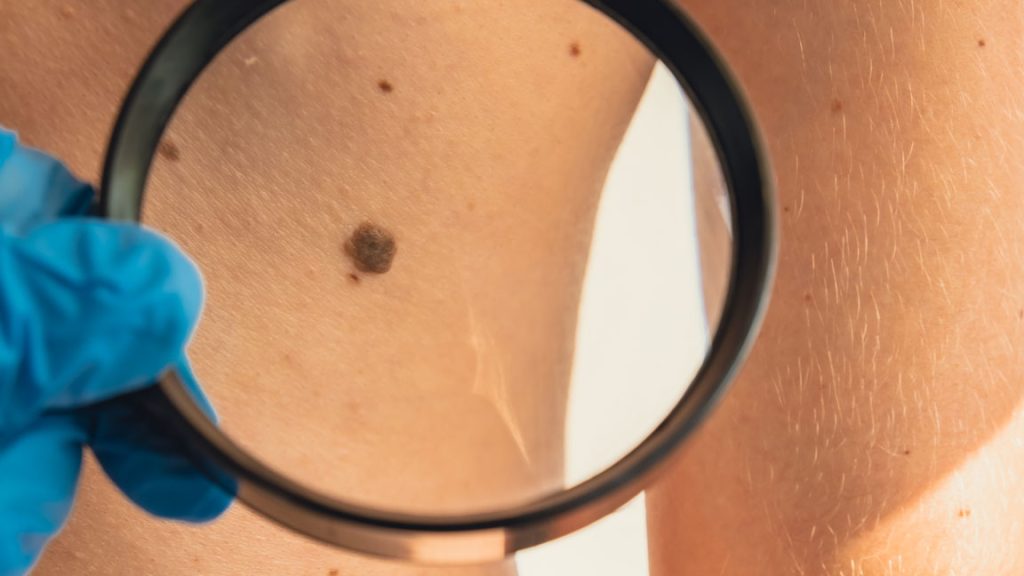
Performing a Self-Check for Skin Cancer
Your doctor or nurse may suggest that you do a regular skin self-exam to check for skin cancer, including melanoma. The best time to do this exam is after a shower or bath. You should check your skin in a room with plenty of light. You should use a full-length mirror and a hand-held mirror. It’s best to begin by learning where your birthmarks, moles and other marks are, and their usual look and feel.
Check for:
- New mole (that looks different from your other moles).
- New red or darker color flaky patch that may be a little raised.
- New flesh-colored firm bump.
- Change in the size, shape, color or feel of a mole.
- Sore that does not heal.
Where to Look:
- Look at your face, neck, ears and scalp. You may want to use a comb or a blow dryer to move your hair so that you can see better. You also may want to have a relative or friend check through your hair. It may be hard to check your own scalp.
- Look at the front and back of your body in the mirror. Then, raise your arms and look at your left and right sides.
- Bend your elbows. Look carefully at your fingernails, palms, forearms (including the undersides), and upper arms.
- Examine the back, front and sides of your legs. Also look around your genital area and between your buttocks.
- Sit and closely examine your feet, including toenails, soles and the spaces between your toes.
By checking your skin regularly, you will learn what is normal for you. It may be helpful to record the dates of your skin exams and to write notes about the way your skin looks. If your doctor has taken photos of your skin, you can compare your skin to the photos to help check for changes. If you find anything unusual, see your doctor.
Performing a self-exam is easy, so please don’t procrastinate. Early detection is one of the most effective ways to mitigate the severity of all types of skin cancer, allowing you to receive treatment before its potential spread.
